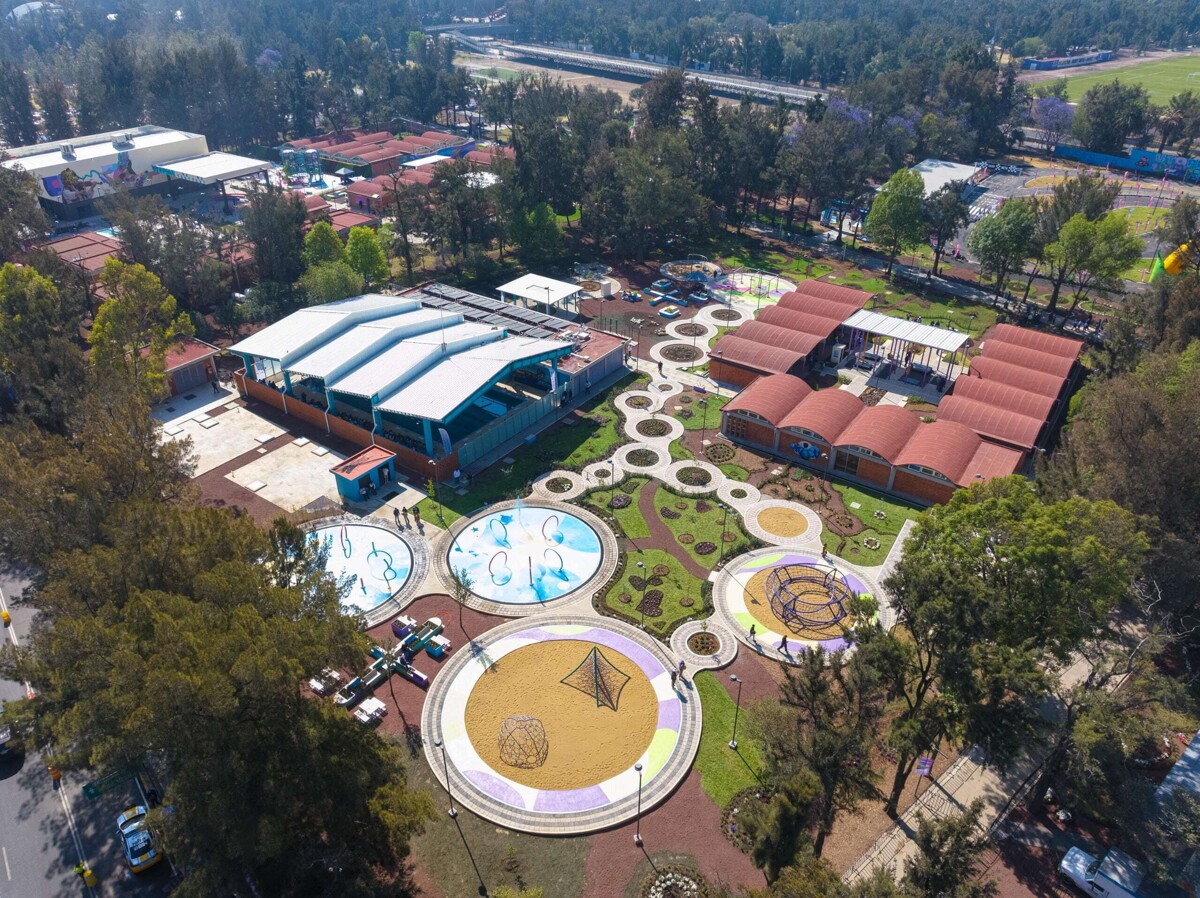
There are already visible results: the first Utopia has been delivered and another 15 are under construction in different locations. Beyond just promoting new infrastructure, what is really at stake is an urban model that invests in public space as a tool to achieve equality; that sees well-being as a right; and that emphasizes the community as the basis for development. The Utopias are exactly that: urban regeneration with a social, sustainable, and inclusive focus. It emerged as a response to a disquieting reality: a lack of decent public spaces, insecurity, and enormous inequalities in access to basic services. The bet from the beginning was clear: to transform abandoned or neglected lots into vibrant community centers. In 2021, it was recognized as a good social urbanism practice during the IV Latin American and Caribbean Forum on Housing and Habitat for its response to the COVID-19 pandemic. In 2023, the Utopia Estrella won the Gold of the Holcim Foundation in Switzerland for its sustainable design. There, sports, culture, recreation, and even care services are mixed. It is based on a simple but powerful principle: bringing rights closer. The Utopias offer free activities for everyone: swimming, boxing, judo, theater, film-debates, artistic workshops, and much more. This is how the first Utopia was born in 2019, and soon more began to appear. The Utopias, one of the most emblematic programs of the current Mexico City administration; are a completely new way of seeing the city. The goal remains to create safe and inclusive spaces where people can coexist, learn, and simply feel well. Today, with Clara Brugada in charge, this model has been expanded to the 16 boroughs. It is not always possible to measure how these spaces change the daily lives of families, especially in areas that have had more disadvantages. The name is not by chance. 'Utopia' refers to the dream of a more just society described by Thomas More in the 16th century; but also, for us, it is an acronym that summarizes its purpose: Units for Transformation and Organization for Inclusion and Social Harmony. The idea is to bring culture, sports, recreation, and well-being to places that have historically been forgotten. In the end, it is about putting those who need it most at the center. Speaking of the social impact of this program is a profound topic. It went from being considered a marginalized area to becoming a clear example of how a good public investment can bring real changes to communities. This model has captured international attention. They are places where well-being stops being just pretty words and becomes part of daily life. The impact in Iztapalapa has been enormous. They seek to close gaps, strengthen the social fabric, and turn public space into a real right of social justice. The program began in 2019 in Iztapalapa under Clara Brugada's management. In short, they represent the government returning to the neighborhood. In other words, they are places designed to build community. These complexes are public, free, and open to all. It also received recognition from the International Observatory of Participatory Democracy (OIDP) as one of the best examples of good governance. And for 2025, UN-Habitat recognized it as an important contribution to sustainable urbanization. As of October 5, 2024, when this new administration began in the city, it was decided to take this model to the entire capital with a clear objective: to build 100 Utopias in all boroughs.